AI avatar · Senior living
Margaret Hale
Memory-care resident
“I can't leave yet. My husband is coming for me.”
Reach someone living with dementia

A resident with dementia refuses her pills. A daughter calls, upset about a fall. New caregivers in assisted living and memory care practice both with a realistic AI avatar first. The real one isn't their first try.
AI avatar · Senior livingMargaret Hale
Memory-care resident
“I can't leave yet. My husband is coming for me.”
Reach someone living with dementia
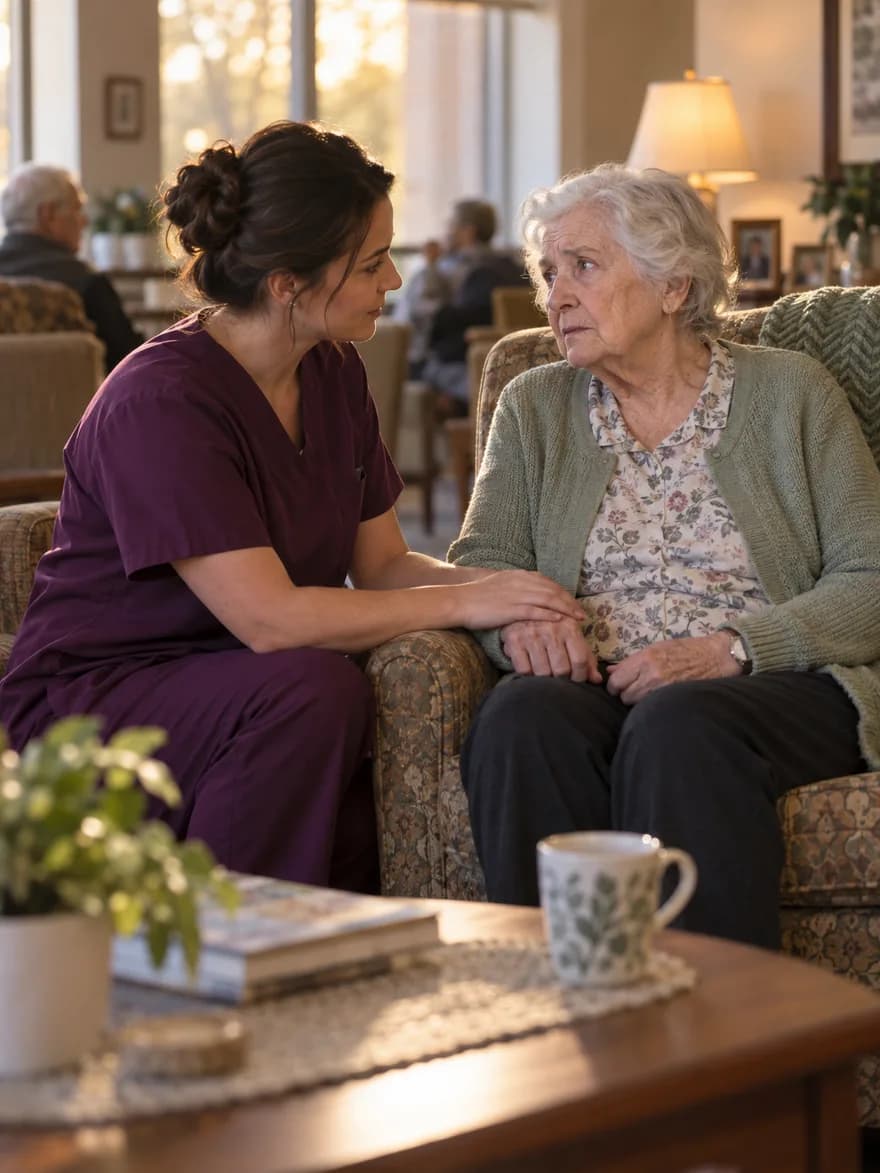
New caregivers practice the agitated resident and the grieving family early. The real moment isn't their first try.
Staff practice the call to a daughter after a fall and the son who questions the care plan. No family hears a rough first try.
New hires don't learn by trial and error on your residents. They reach the floor having practiced the hardest moments first.
Day and night shifts, in every building, practice the same talks and are scored against one checklist.
Voice AI training means senior living caregivers practice the hardest moments of the job out loud, before they happen on the floor. On Trainio, a realistic AI avatar plays the resident with dementia at sundown, or the daughter upset about a fall. When the real moment comes, your caregiver has been there before.
A new caregiver has already lived through the conversation that makes people quit. It happened in practice, where it was safe.
Redirecting instead of correcting can turn an incident into a calm evening. That skill only sticks when caregivers practice it again and again.
A complaint handled well at the front desk is one the family doesn't take to corporate or the state.
Scenarios for dementia routines, resident conflict, and family complaints are ready today. Try one right now: every card on this page opens a live conversation in your browser.

A resident asks the same question again, refuses a shower, or says someone stole her purse. Staff practice redirecting instead of correcting, and the shift stays calm.
Explore scenarios →
A daughter is angry after a fall. A son questions the bill. A family can't accept that Mom is declining. Staff practice these talks first, and managers can read every transcript.
Explore scenarios →
A resident lashes out during care, or a visitor makes a scene in the hall. Staff practice calming it down while everyone stays safe and keeps their dignity.
Explore scenarios →Ready-made scenarios for assisted living, memory care, and independent living. The residents and families in them act like the real people on your floor. They repeat, push back, and grieve.

George Pratt
Assisted-living resident
A resident refusing a needed task like bathing or medication, embarrassed or stubborn. Learner must protect dignity, understand the refusal, and gently gain cooperation without forcing.
Skills you'll train

Eleanor Voss
Memory-care resident
A resident with dementia accusing the caregiver of stealing and getting upset. Learner must stay calm, not take it personally, validate the feeling, and redirect rather than defend.
Skills you'll train

Susan Brennan
Resident's daughter
A family member who must hear their loved one declined or had an incident. The AI reacts with worry, guilt, or anger. Learner must deliver it clearly and compassionately and answer honestly.
Skills you'll train

Daniel Brennan
Resident's son
A family member furious that calls went unreturned and care seems inattentive. Learner must absorb the frustration, acknowledge it sincerely, and move to a concrete fix without defensiveness.
Skills you'll train

Lillian Park
Memory-care resident
A resident growing restless and anxious in the late afternoon. Learner must use a soothing presence, reduce stimulation, and redirect to something calming.
Skills you'll train

Arthur Greene
Agitated resident
A brand-new caregiver facing their first agitated resident or upset family. Learner must stay composed, apply the basics, and ask for help when appropriate.
Skills you'll train
Need a conversation that isn't here? Make it from your protocol: build your own scenario
Choosing a community for a parent is hard on a family. Your counselors practice the first tour, the cost talk, and the family that isn't ready yet. A realistic AI avatar plays the worried adult child.

Lauren Whitaker
Hesitant adult daughter
An adult daughter tours the community for the first time, asking practical questions while revealing guilt and uncertainty about her mother’s move. The AI persona is cautious and emotionally torn, softening when her concerns are heard without being dismissed. Learner must build trust, uncover priorities, and connect honest information to her mother’s needs without pressure.
Skills you'll train

Peter Langford
Cost-concerned son
A son reacts sharply to the monthly rate, comparing it to a mortgage and questioning whether the community is worth it. The AI persona pushes back if the cost is defended, but engages when the full picture is explained plainly. Learner must acknowledge the concern, clarify what is included, and explore fit and options honestly.
Skills you'll train

Renee Caldwell
Protective daughter
A family says Mom is not ready to move, even as they describe growing safety and support concerns at home. The AI persona remains protective of her autonomy and resists urgency, but becomes more open to a small next step when treated respectfully. Learner must honor the family’s pace, surface the risks of waiting, and agree on a low-pressure follow-up.
Skills you'll train
Pick a hard conversation, make it look and sound like your patients, send it to your staff, and see who's ready. No trainer to book, no classroom to fill.
Start with one of 1,000+ ready-made scenarios, or type what happened on your floor last week. In a minute or two you get a patient to talk to and a checklist of what good looks like.
Choose how hard the patient is, pick their face and voice, and set the rules the conversation has to follow. Then decide what a pass looks like for your team.
Assign it to the front desk, the night shift, or this month's new hires. Everyone gets a link and practices on their own time, on any shift.
Every practice is scored the same way, with a transcript. You see who's ready by person, team, and site, and you have something to show a surveyor.
Keep your phone scripts, SOPs, and protocols in the Knowledge hub. Staff find the right one in seconds, in the same place they practice.
Every practice is saved with its score and transcript, by caregiver, shift, and community. You can show it during a survey or a family dispute.
Night-shift caregivers practice at 2 a.m. without a trainer in the building. Ten minutes between rounds is enough.
Assign scenarios by role, unit, or community. See who's ready by person, team, and site. HR system sync is on Enterprise.
Look for practice that gets new caregivers through their first 90 days. It should cover the resident with dementia who refuses care and the family who is upset after a fall. Caregivers should be able to practice between rounds, on any device. And you should see who's ready, community by community.
On Trainio: The resident repeats and refuses. They calm down only when your caregiver redirects gently.
On Trainio: Scenarios for a hesitant adult child and "Mom isn't ready yet" are live.
On Trainio: Scores and transcripts by caregiver, team, and community.
On Trainio: A practice takes three to ten minutes, on any device.
Senior living staff training with AI roleplay is practice for the hard moments with residents and families, before they happen on the floor. Caregivers talk with a realistic AI avatar. It plays a resident with dementia or an upset family member. Seconds after it ends, they get a score and notes on what they said.
Decide how prepared your staff will be when it arrives.
14-day free trial · from 5 seats · no credit card